Self-consumption home
A hybrid inverter and LFP battery can shift midday PV into evening loads when the tariff makes export less attractive. The design review should separate nominal and usable kWh and reserve capacity for outages.
Savings and sustainability
Growatt supports solar and storage adoption without absolute environmental claims. A home battery does not make every site "zero carbon" from day one, and savings cannot be guaranteed without tariff, roof, usage, and incentive details. The useful conversation is more grounded: produce solar energy when the roof allows it, store surplus when the tariff rewards it, keep critical loads running during outages, and review the data over time.
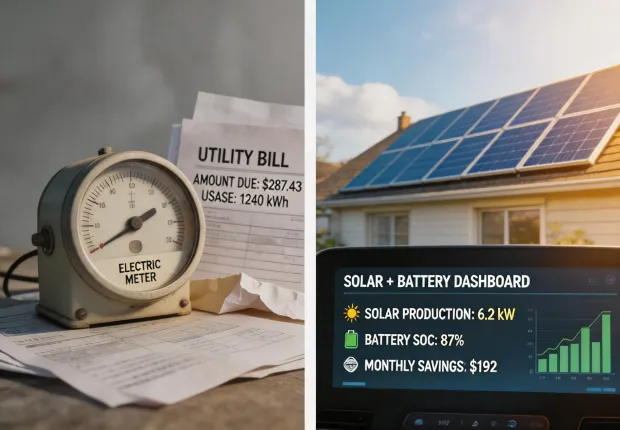
Static savings demo
Use this mock calculator layout as a preparation checklist. Real results depend on interval usage, retail electricity rate, net metering rules, battery reserve setting, equipment cost, regional rebates, and whether the project qualifies for federal or local incentives. For eligible U.S. residential installations, the federal ITC may be available subject to IRS guidelines and project timing.
A hybrid inverter and LFP battery can shift midday PV into evening loads when the tariff makes export less attractive. The design review should separate nominal and usable kWh and reserve capacity for outages.
Critical-load planning helps a family keep refrigeration, networking, lighting, and selected outlets online while avoiding unrealistic whole-home backup promises for high surge appliances.
Solar kits and inverter/chargers can reduce generator runtime, but autonomy depends on weather, battery temperature, load discipline, and maintenance access.
Share bill, roof, reserve, and regional details so the savings discussion can become a responsible system plan.